
How To Pack a Storage Unit Efficiently
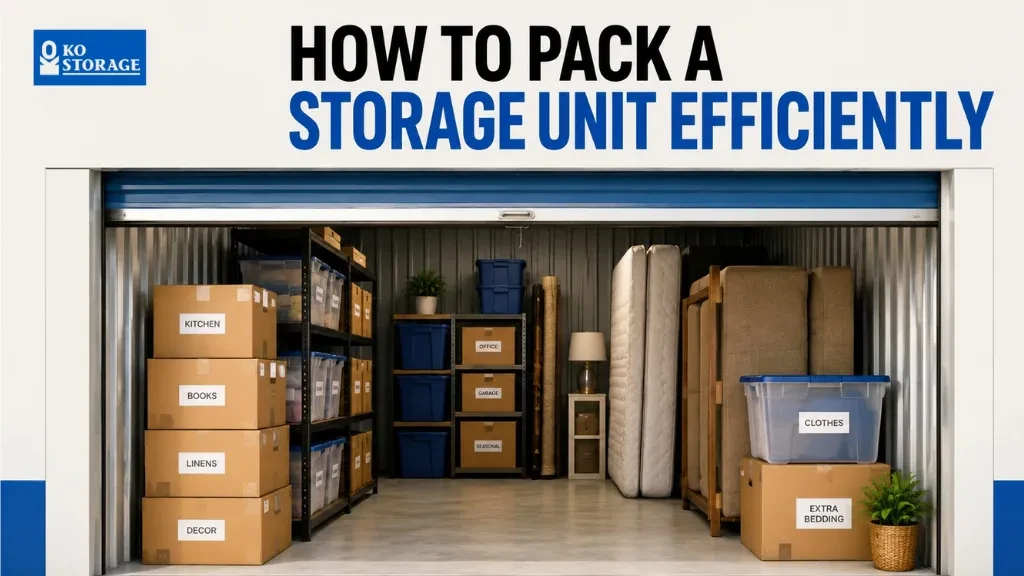
In this guide you’ll learn:
- How to plan and size your unit before you start packing
- Why disassembling furniture saves significant space
- Which packing materials protect items without wasting room
- How to fill gaps and use every cubic foot
- How packing efficiently can help you rent a smaller, cheaper unit
A little planning before you load your unit can save you real money, since packing efficiently often means you can rent a smaller unit size instead of paying for extra square footage you don't need. Here's how to make every square foot of your unit count.
Start With a Plan, Not a Truck Full of Boxes
Before you load anything, sift through what you're storing and group it by size and how often you'll need it. If you're not sure how much space that adds up to, our unit size guide can help you land on the right size instead of guessing and paying for more room than you need.
Disassemble Furniture Before You Load It
Bed frames, tables, and shelving take up far less space broken down than assembled. Remove legs, unscrew shelves, and stack flat pieces like tabletops and mattresses against a wall rather than leaving them upright, where they waste awkward pockets of space. Keep hardware in a labeled bag taped to the piece it belongs to, so nothing gets lost between now and moving day.
Choose Packing Materials That Protect Without Taking Up Room
Wardrobe boxes keep clothes on hangers and off the floor. Vacuum-sealed bags shrink bedding, pillows, and offseason clothing down to a fraction of their normal size. Uniform, stackable box sizes hold up better under weight than mismatched boxes and stack far more efficiently than oddly shaped containers. For a full list of what to pack with, our packing and moving tips page covers supplies in more depth.
Fill Every Gap You Create
Once furniture is in place, use soft items like pillows, folded blankets, and seasonal clothing to fill the empty pockets around and inside larger pieces, such as inside a dresser or under a table. Empty space is space you're paying for without using it.
Stack With Retrieval in Mind
Heavier, less frequently needed items belong on the bottom and toward the back of your storage unit. Anything you'll want again soon should stay near the front, within easy reach. For a full system for organizing and labeling your unit so you can find things months later, see our guide on how to organize a storage unit.
Protect Items That Need Extra Care
Electronics, wooden furniture, and anything sensitive to temperature swings hold up best in a climate-controlled unit rather than a standard one. If you're packing items like these, it's worth looking into climate-controlled storage before you settle on a unit type.
Efficient Packing Means You Can Rent Smaller
The real payoff of packing well is that it changes what size unit you actually need. A household that packs loosely might rent a 10x15 unit out of caution, while the same items, packed tightly and disassembled, often fit in a 10x10 unit. That difference adds up every month, so it's worth taking a little extra time to pack efficiently. If you're also weighing how long to commit to a unit, our guide on month-to-month vs. long-term storage can help you decide on lease length at the same time you're deciding on size.
Ready to Pack Smart and Rent the Right Size?
When you're ready to invest in your storage unit, find a KO Storage location near you and reserve your unit online from the comfort of your home.