
What Can (and Can't) You Store in a Self Storage Unit?
In This Post
- What is acceptable to store in a self storage unit
- Items that are prohibited for safety or legal reasons
- Things that are technically allowed but not a good idea
- Items that need a climate-controlled unit to stay protected
Most items you would want to store are perfectly fine in a self storage unit. Furniture, clothing, boxes, appliances, seasonal gear: all standard, no issues.
But some categories of items are prohibited, unsafe, or simply bad ideas regardless of what your rental agreement technically says. Here is a clear breakdown of what is in, what is out, and what needs special consideration before you pack.
What You Can Store
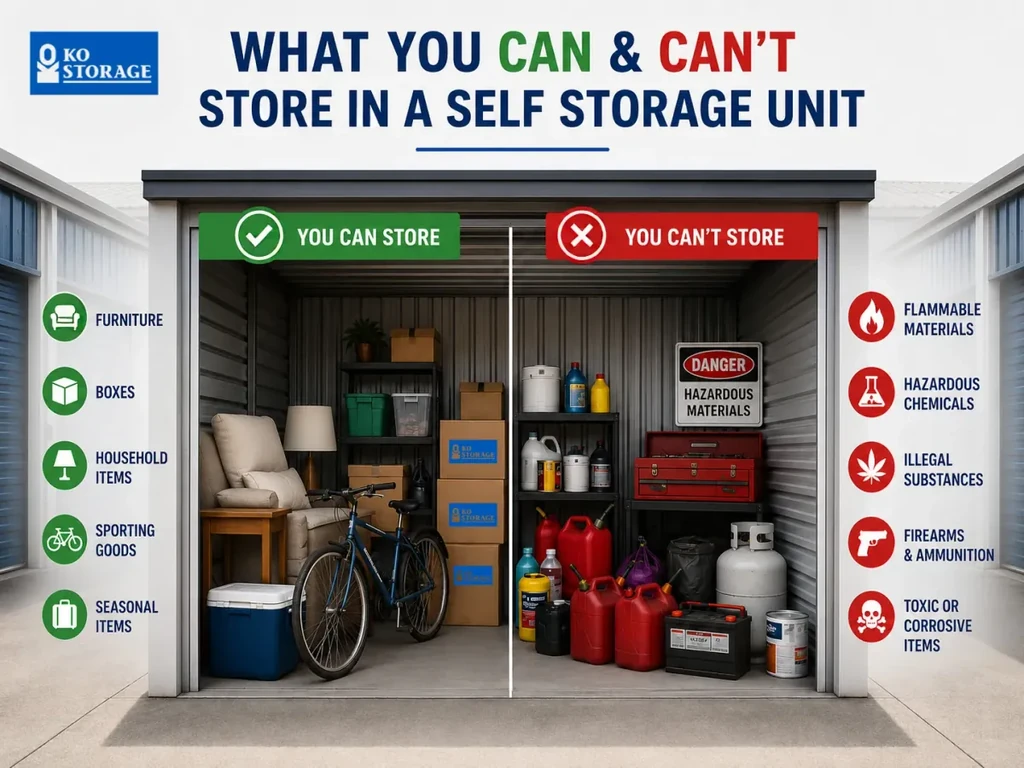
The acceptable list covers most household and business storage needs:
- Furniture: sofas, beds, tables, chairs, dressers, shelving
- Clothing, shoes, and textiles
- Boxes and totes of household goods
- Electronics: TVs, computers, speakers, small appliances
- Sporting equipment: bikes, kayaks, camping gear, golf clubs, skis
- Seasonal items: holiday decor, lawn furniture, snow blowers, fans
- Musical instruments (in climate-controlled units for anything wooden or sensitive)
- Business inventory, files, office furniture, and equipment
- Vehicles, motorcycles, boats, and RVs at facilities with vehicle storage
What You Cannot Store
These items are prohibited at all self storage facilities. The reasons are safety-related: a fire, spill, or pest infestation in one unit affects neighboring renters' belongings too.
- Hazardous materials: chemicals, pesticides, paint, solvents, acids
- Flammable or explosive items: gasoline, propane tanks, fireworks, ammunition
- Perishable food: anything that can rot, attract pests, or create odors
- Live plants: they do not survive in an enclosed unit and create moisture and pest issues
- Illegal items or stolen goods
- Living animals: never, under any circumstances
If you have any questions about a specific item, call the facility before your move-in date. Most questions have a quick, definitive answer, and your rental agreement will outline facility-specific rules as well.
Items That Are Technically Allowed but Not a Good Idea
Some things can go in a unit without violating any policy but still represent a risk worth thinking about:
Cash and high-value irreplaceable items
Storage units are secure, but they are not bank vaults. Jewelry, significant amounts of cash, irreplaceable documents, or one-of-a-kind items are better stored in a home safe or safety deposit box. If you do store valuables, invest in self storage insurance.
Medications requiring refrigeration
Temperature fluctuations in standard units make them unsuitable for any medication that requires consistent refrigeration. Climate-controlled units regulate temperature but are not designed as pharmaceutical storage.
Items with strong persistent odors
Strong odors from stored items can migrate through shared walls or door gaps to neighboring units. Facilities reserve the right to require removal of items that affect neighboring renters.
Items That Need Climate-Controlled Storage
Some items can technically go in a standard unit but are genuinely better protected in a climate-controlled one:
- Wooden furniture and instruments: warp and crack in temperature extremes
- Electronics: condensation from freeze-thaw cycles damages internal components
- Photographs, artwork, and documents: paper degrades in humidity
- Clothing stored long-term: mold and mildew develop in humid conditions
- Collectibles: coins corrode, stamps stick, ceramics can crack in freezing temperatures
If your storage facility is in a region with extreme heat, cold, or humidity, and you are storing items in any of these categories, a climate-controlled unit is the right choice. See a full breakdown of what belongs in a climate-controlled unit.
When in Doubt, Ask
Your rental agreement covers what is and is not permitted at your specific location. Facilities can vary slightly in their policies around specific items like grills, propane tanks (empty vs. full), and certain chemicals.
If you are unsure about something specific, contact the facility before move-in. The KO Storage FAQ also covers common questions about what you can store, insurance options, and how to get the most from your unit.
Ready To Reserve?
Ready to rent? KO Storage has locations across the U.S. with flexible unit sizes and month-to-month leasing. Find a storage facility near you and reserve online today with no credit card required.