
How to Store Your Boat for the Winter
In this guide, you’ll learn:
- How to prep your boat before it goes into storage
- How to choose between indoor and outdoor boat storage
- Steps to winterize the engine, fuel system, and battery
- How to pack and organize gear for the offseason
- What to check on while your boat is in storage
- How to get your boat ready for spring launch
Winterizing a boat properly is what stands between a smooth spring launch and a spring full of repairs. Here's what to handle before your boat goes into storage, and what it needs while it sits, so you can find a boat storage spot with confidence.
Prepping Your Boat Before It Goes Into Storage
Start with a full wash of the hull and deck and clear out anything perishable, like food or drinks, that can mildew if left onboard all winter. It's also worth taking care of a few things while the boat is still easy to access, such as draining live wells and any standing water and taking a lap around the boat to note any existing damage now, rather than finding it in the spring.
Choosing Indoor or Outdoor Boat Storage
- Indoor storage helps protect gelcoat, upholstery, and electronics from UV exposure and temperature swings, which matters most if your boat will spend several months in a cold or humid climate.
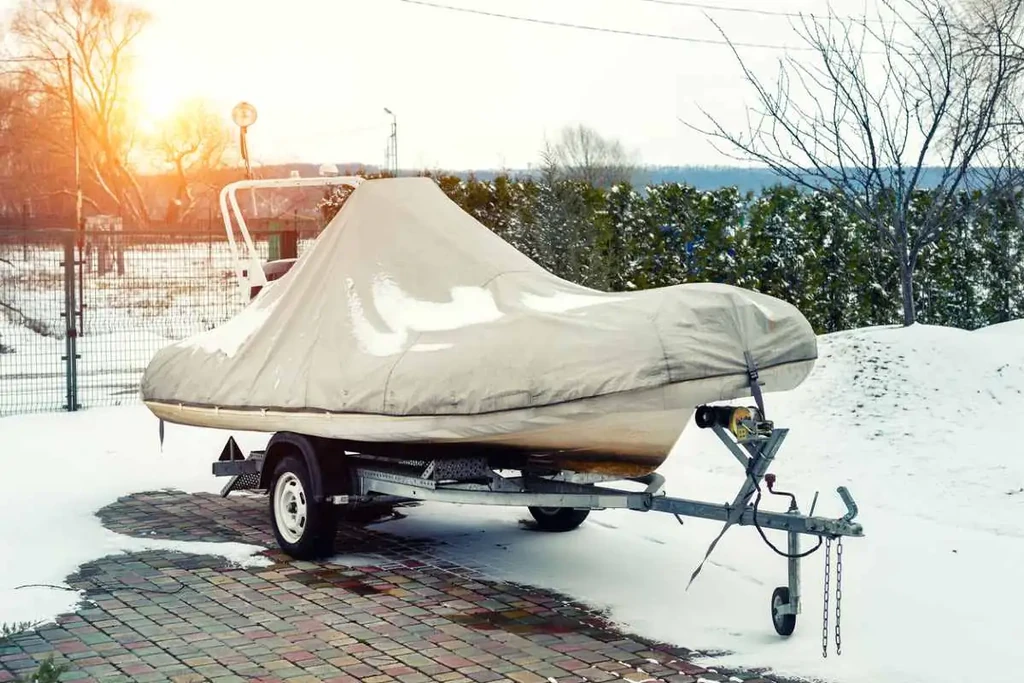
- Outdoor storage costs less and works fine for shorter offseasons or milder climates, especially paired with a well-fitted cover.
For a deeper breakdown of how indoor and outdoor storage compare on cost, protection, and access, our guide to indoor versus outdoor RV storage walks through the same trade-offs that apply to boats.
Winterizing the Engine and Fuel System
This is the part of winterizing that actually protects the engine over the offseason:
- Fill the fuel tank and add a fuel stabilizer, then run the engine briefly so it works through the system.
- Change the oil and filter, since old oil holds moisture that can damage internal components over a long offseason.
- In freezing climates, have the cooling system winterized so water doesn't freeze and crack the block.
- Remove the battery for indoor storage, or keep it on a trickle charger so it doesn't fully drain.
If you're winterizing a car or an RV alongside the boat, our pre-storage checklist for cars and RVs covers the same battery and fluid basics.
Packing and Organizing Gear for the Offseason
Clean and fully dry life jackets, fishing gear, and water sports equipment before storing them, since packing anything damp is how mildew gets started. Labeled bins by category make everything easier to find when boating season starts again. Our guide on how to pack a storage unit covers the same packing techniques (uniform bins, filling gaps, protecting anything sensitive) if you're storing more than a boat this offseason.
What To Check On During the Winter
A boat sitting in storage for months still needs occasional attention. It’s important to check the following every once in a while:
- Battery charge
- Signs of moisture or pests inside the cabin
- Whether the cover is still snug and hasn't shifted or torn
Catching a small issue in January is a lot easier than finding it the week you plan to launch. Do you have questions about access hours or facility policies while your boat is in storage? Our FAQ page covers the common ones.
Getting Ready for Spring Launch
Before you put your boat back in the water, inspect the engine, fuel lines, hull, and electrical connections, and reinstall any gear you removed for storage. A quick walk-through now catches anything that needs attention before you're at the dock.
Ready To Store Your Boat for the Season?
Find a KO Storage location with boat storage and reserve a unit online. Once you're set up, you can manage your rental and pay online all winter without a trip to the office.